Introduction to Supply and Demand Market Intelligence
In global trade and financial markets, timely access to reliable supply and demand reports is critical for operational planning, risk management, and strategic investment. Recently, market reporting outlets including Barchart.com published updates regarding the World Agricultural Supply and Demand statistics dated August 30. While these reports focus primarily on commodity fundamentals, production totals, and global inventory levels, they also highlight a broader technological reality: modern supply chain tracking is fundamentally powered by sophisticated data infrastructure and semiconductor processing capabilities.
Today, market participants do not merely read periodic PDF summaries; they rely on digital feeds, automated analytics engines, and real-time market data networks to ingest economic updates instantly. Understanding how these data pipelines operate—and how underlying technology platforms convert raw agricultural statistics into actionable insights—provides valuable context for technology leaders, supply chain managers, and data analysts alike.
Understanding the Context: Barchart Supply and Demand Reporting
Market intelligence platforms such as Barchart gather, synthesize, and disseminate complex economic datasets from official institutional sources, government bodies, and international trade bodies. The World Agricultural Supply and Demand estimates represent comprehensive evaluations of crop yields, global inventory balances, export projections, and domestic consumption patterns.
Confirmed Information vs. Technology Analysis: It is confirmed that Barchart published coverage on the World Agricultural Supply and Demand release context dated August 30 (published on August 31, 2026). What requires deeper technical analysis is the backend technology infrastructure that makes high-speed processing, distribution, and visualization of such massive economic datasets possible for global financial and industrial users.
The Technological Architecture Behind Modern Market Analytics
Processing worldwide supply and demand data requires a multi-layered technology stack capable of handling high-throughput ingestion, real-time validation, and scalable distribution. As global markets become more interconnected, the technical demands placed on financial and commodity platforms continue to expand.
High-Performance Data Ingestion Pipelines
When major supply and demand figures are released, thousands of institutional systems query data providers simultaneously. Modern market platforms utilize distributed cloud architectures, event-driven streaming frameworks, and low-latency API gateways to ensure that incoming figures are processed without server bottlenecks or service degradation. Automated ETL (Extract, Transform, Load) pipelines ingest raw tabular data, normalize metrics across standard weight and volume units, and instantly update downstream customer dashboards.
The Crucial Role of Advanced Semiconductor Hardware
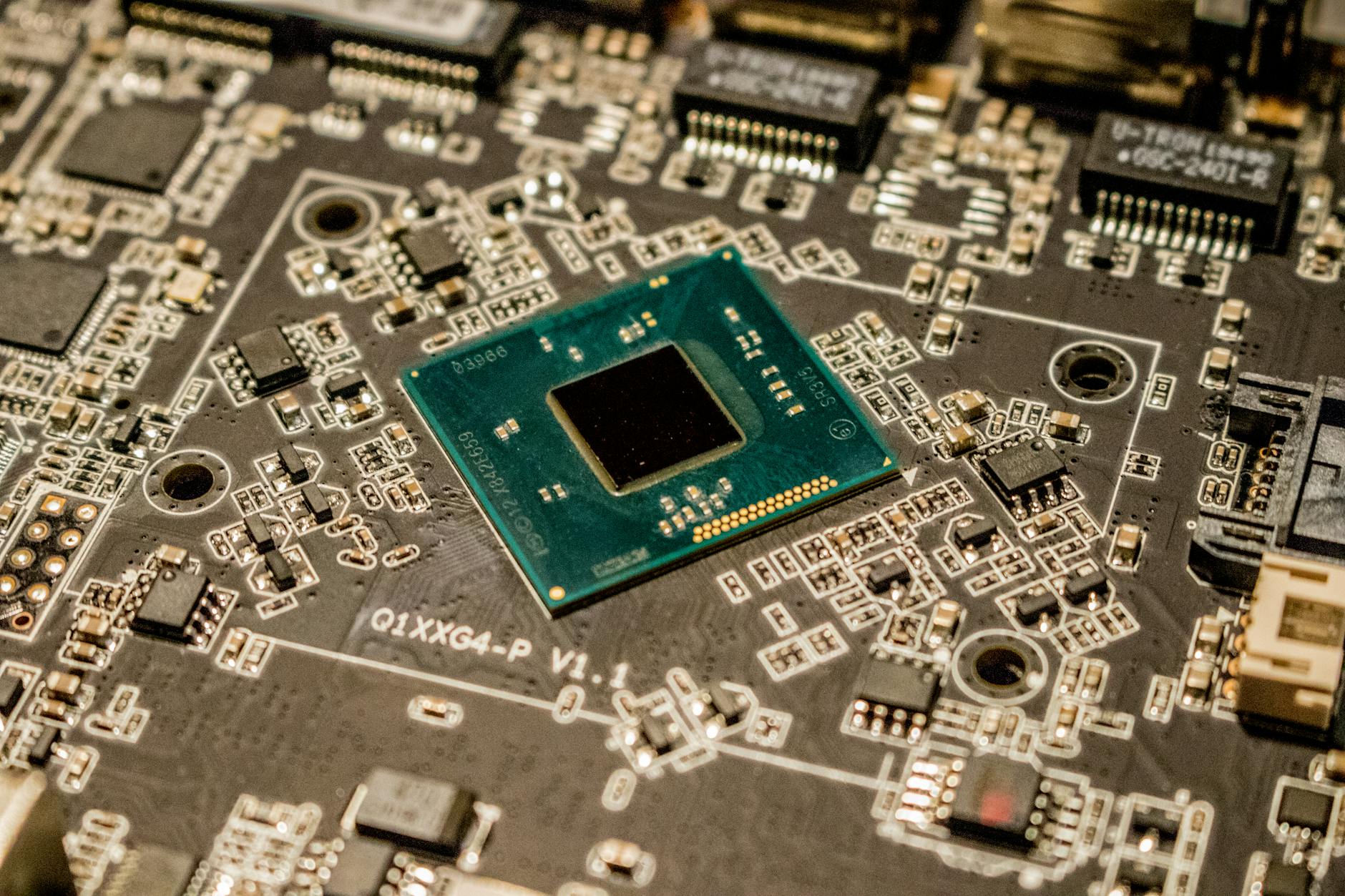
At the base of every high-volume data platform lies optimized microelectronic hardware. Modern market supply and demand analytics rely heavily on high-speed server processors, high-bandwidth memory arrays, and specialized compute accelerators to run predictive algorithms, risk simulations, and natural language processing tasks over market feeds.
As technological requirements scale across quantitative platforms and enterprise data centers, hardware advancements remain pivotal. A closer look at shifting semiconductor ecosystems can be found in our comprehensive analysis of Semiconductor News Roundup: US Korea Chip Pressure, MediaTek Google TPU, Apple 2nm M6, which explores how next-generation silicon feeds processing-heavy enterprise workloads.
Real-World Applications and Practical Use Cases
The convergence of market intelligence and advanced data technology delivers concrete utility across multiple sectors. Below are primary real-world applications where digital supply and demand tracking directly impacts business operations.
Smart Logistics and Autonomous Fleet Scheduling
Logistics operators combine global commodity supply updates with IoT telematics platforms. When supply estimates indicate regional harvest surpluses or deficit shifts, shipping networks automatically re-route transport assets, adjust ocean freight scheduling, and optimize rail car allocation to prevent port congestion and lower transit costs.
Automated Risk Management and Algorithmic Hedging
Commercial buyers, food processors, and trading houses embed automated market feeds into enterprise resource planning (ERP) platforms. Algorithmic software monitors incoming supply and demand numbers, automatically flagging cost variances and triggering derivative hedges or procurement contracts when key commodity inventories breach predefined threshold levels.
Precision Agriculture and On-Farm Resource Optimization
Modern agtech platforms merge macro-level supply and demand statistics with micro-level farm telemetry. Soil sensors, drone imagery, and automated machinery use global supply context to help farmers adjust planting ratios, fertilizer application rates, and storage timelines based on expected global market saturation.
Key Benefits of Automated Supply and Demand Analytics
Leveraging high-tech data distribution systems for market reporting offers distinct operational advantages over traditional manual tracking methods:
- Speed and Latency Reduction: Automated data feeds eliminate delays between official report publications and internal enterprise decision-making.
- Enhanced Standardisation and Accuracy: Automated validation algorithms reduce human data-entry errors when converting complex global units and currencies.
- Scalable Integration: Modern RESTful APIs and WebSocket streams allow businesses to plug market data directly into custom software applications.
- Scenario Simulation: High-performance hardware enables analysts to run complex multi-variable economic simulations in seconds rather than hours.
Limitations, Operational Risks, and Data Challenges
Despite significant advancements in digital reporting, reliance on automated supply and demand analytics introduces technical and structural risks that organizations must carefully manage.
Data Discrepancies and Ingestion Faults
Automated ingestion systems can occasionally misinterpret unexpected formatting changes in raw source documents. If an official reporting body alters tabular layouts or unit definitions, automated scrapers or APIs may generate erroneous data downstream unless robust schema validation is enforced.
Infrastructure Latency and Regional Connectivity Bottlenecks
While centralized cloud servers process data in milliseconds, edge facilities and rural agricultural hubs may face bandwidth constraints. Delayed market feeds can lead to asymmetric information access, putting localized operators at a temporary competitive disadvantage against high-frequency market participants.
Cybersecurity and Data Integrity Vulnerabilities
Market-moving reports are prime targets for malicious actors. Manipulating or delaying supply and demand feeds can cause severe market distortion. Implementing cryptographic verification, immutable access logs, and redundant multi-cloud hosting is essential to safeguard data integrity.
Future Outlook: The Intersection of Silicon, AI, and Commodities
Looking ahead, the delivery and analysis of global supply and demand intelligence will continue to evolve alongside cutting-edge compute infrastructure. Several emerging trends are expected to shape the future of market technology:
- Generative AI and Natural Language Querying: Decision-makers will increasingly query complex supply and demand databases using natural conversational interfaces powered by specialized enterprise AI models.
- Satellite Telemetry Integration: Data providers will increasingly cross-reference official written supply reports against direct synthetic aperture radar (SAR) satellite imagery to verify global crop health and stockpile storage levels in real time.
- Energy-Efficient Silicon Compute: As processing workloads expand, enterprise data platforms will adopt energy-efficient domain-specific architectures to reduce server power consumption while maintaining real-time processing performance.
Conclusion
The publication of updates such as the World Agricultural Supply and Demand report by Barchart highlights the critical role market intelligence plays in the modern global economy. However, the true utility of these reports relies heavily on the underlying technology ecosystem—spanning high-speed server hardware, advanced semiconductors, scalable data streaming architecture, and automated enterprise software.
As supply chain complexity grows and economic volatility remains a factor, organizations that effectively integrate advanced data technology and robust compute infrastructure into their operational workflows will be best positioned to navigate shifts in global supply and demand.
Frequently Asked Questions (FAQ)
What is the World Agricultural Supply and Demand report?
It is a comprehensive economic evaluation detailing global crop production, consumption, export balances, and ending stocks. Market platforms like Barchart ingest and report on these updates to inform traders, producers, and logistics planners.
How do financial platforms like Barchart deliver supply and demand data?
Financial platforms utilize automated data ingestion pipelines, cloud infrastructure, and low-latency APIs to transform raw tabular report releases into structured digital feeds, interactive charts, and downloadable datasets for users.
Why are semiconductors important for market analytics platforms?
Semiconductor chips—including high-performance CPUs, GPUs, and enterprise memory devices—provide the processing power required to run high-throughput data pipelines, run real-time risk simulations, and execute quantitative market models without latency.
How do enterprise supply chains benefit from real-time market reporting?
Real-time market reporting enables enterprise supply chains to automate procurement strategies, adjust fleet transportation schedules, manage inventory risks, and react proactively to emerging global supply shortages or surpluses.
What are the primary technical risks of relying on automated market feeds?
Key technical risks include schema parsing errors during raw data updates, network latency bottlenecks in remote areas, and cybersecurity threats that could compromise the integrity or delivery speed of market-moving data feeds.