 |
| vivo |
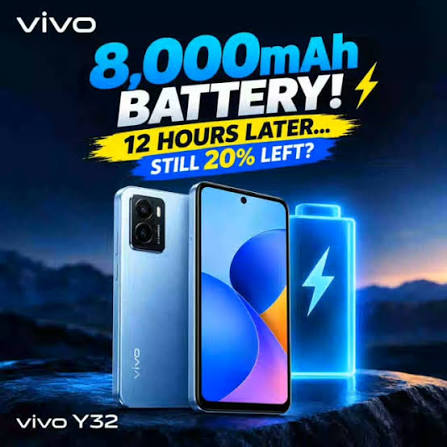
For years, smartphone users have lived under the tyranny of the daily charging cycle. Regardless of whether a device boasts a ultra-high-resolution display, professional-grade camera arrays, or artificial intelligence capabilities, almost every flagship handset eventually demands a date with a wall outlet before bedtime. However, recent developments reported by Business Today highlight a significant shift in mobile hardware strategy: Vivo has unveiled a smartphone equipped with a massive 8,000mAh battery, designed to fundamentally change how users interact with their mobile devices.
This development comes at a pivotal moment for the mobile device ecosystem. As processing power scales upward and display refresh rates remain high, power consumption has historically offset software efficiency gains. An 8,000mAh cell represents a dramatic increase over the standard 4,500mAh to 5,500mAh batteries found in most conventional devices, bringing heavy-duty battery capacity into mainstream smartphone designs. In this comprehensive report, we analyze the engineering advancements enabling this breakthrough, real-world practical applications, potential technical trade-offs, and what this shift means for the broader smartphone market.
The 8,000mAh Milestone: Confirmed Details and Context
The primary highlight of Vivo's news revolves around breaking past the traditional power ceiling of standard handheld devices. Historically, smartphone manufacturers avoided building smartphones with power cells significantly larger than 5,000mAh or 6,000mAh due to strict physical limits. Placing massive battery capacity inside a phone typically meant producing a thick, heavy, and awkward device resembling a rugged outdoor tool rather than a refined daily driver.
According to reported coverage, Vivo's new 8,000mAh smartphone aims to provide a major surprise regarding ergonomics and longevity. While official complete specification sheets across global regions continue to roll out, the confirmed headline feature is clear: an energy cell robust enough to comfortably stretch multi-day battery life beyond typical daily recharge expectations.
To put an 8,000mAh capacity in context, modern high-end smartphones evaluated across industry roundups—such as those highlighted in our guide to the best phones of 2026—frequently balance battery size against chassis thickness. Vivo's push to deliver an 8,000mAh unit signals that chemical density and structural packaging have reached a point where extreme power capacity no longer requires a uncomfortably bulky device.
The Engineering Behind Next-Gen High-Density Batteries
How do device makers achieve an 8,000mAh rating without creating an excessively thick casing? While hardware vendors closely guard proprietary manufacturing methods, industry-wide technological shifts provide valuable insight into how high-capacity batteries are becoming viable for modern form factors.
Silicon-Carbon Anode Chemistry
Traditional lithium-ion batteries rely on graphite anodes, which have reached theoretical physical limits regarding energy storage per gram. Recent industry advancements have pivoted toward silicon-carbon composite anodes. Silicon offers a theoretical lithium storage capacity roughly ten times higher than traditional graphite. By integrating silicon nanostructures into carbon frameworks, battery engineers can pack substantially more milliamp-hours into the exact same physical volume without causing destructive internal swelling during charge cycles.
Internal Space Optimization
Achieving extended battery density requires holistic smartphone design improvements. Smartphone makers achieve space savings by reducing motherboard footprints, adopting stacked printed circuit boards (PCBs), and incorporating ultra-thin vapor chamber cooling systems. Additionally, advancements covered in our semiconductor news roundup highlight how lower-nanometer chipset architecture allows processors to operate more efficiently within tighter physical enclosures, freeing up vital space for energy storage hardware.
Real-World Use Cases and Practical Benefits
A smartphone battery boasting an 8,000mAh capacity is not merely an incremental specification upgrade; it fundamentally shifts how different categories of users rely on their mobile devices. Here are the practical benefits offered by such a substantial power reservoir:
- Multi-Day Off-Grid Travel: Hikers, business travelers, and outdoor professionals can navigate using GPS, take photographs, and maintain connectivity across two to three full days without needing an external power bank or solar charger.
- Extended High-Intensity Gaming: Mobile gaming places heavy simultaneous demands on the graphics chip, display backlight, and wireless radios. An 8,000mAh battery allows extended gaming sessions without suffering severe mid-game battery depletion.
- Heavy Content Creation and Streaming: Recording high-bitrate video, editing footage on device, or streaming live video drains energy rapidly. Extended battery capacity provides content creators with peace of mind during full-day location shoots.
- Emergency and Reverse Charging Capability: With 8,000mAh on board, a smartphone can effectively serve as a reliable emergency power source. Through wired reverse charging, users can top off wireless earbuds, smartwatches, or even secondary smartphones.
Technical Trade-Offs, Risks, and Environmental Considerations
While an 8,000mAh battery offers obvious convenience, large-capacity energy cells bring technical considerations and long-term implications that users and industry observers must evaluate.
Weight and Ergonomic Distribution
Even with advanced energy-density chemistry, physical mass cannot be entirely eliminated. Devices housing 8,000mAh cells inevitably carry more weight than 4,500mAh alternatives. Manufacturers must balance weight distribution across the device body to prevent wrist fatigue during prolonged single-handed use.
Thermal Management and Fast Charging Speeds
Charging a massive 8,000mAh cell safely and quickly requires sophisticated thermal management. While fast-charging protocols allow high wattage input, rapid energy transfer generates heat. If heat is not dissolved efficiently, thermal stress can degrade internal chemistry over time. Designers must carefully optimize power delivery algorithms to ensure rapid charge times without compromising long-term cell health.
Long-Term Reliability and Repairability
As smartphones remain in active service for longer periods, battery degradation becomes a primary reason consumers replace hardware. Replacing ultra-dense, complex battery structures requires specialized tools and safe disassembly procedures. Consumers and technicians alike benefit when devices are constructed with maintenance in mind, aligned with trends detailed in our analysis of the right to repair movement.
E-Waste and Recycling Dynamics
Larger batteries require greater quantities of raw materials, including lithium, cobalt, nickel, and silicon. Ensuring these materials are recycled responsibly at the end of the device's lifecycle is essential. As discussed in our deep dive on the global e-waste economy, scaling up battery capacities across millions of consumer devices makes effective battery recycling infrastructures more critical than ever.
Market Impact: Will Competitors Follow Vivo's Lead?
Vivo's step into 8,000mAh territory sets a challenging benchmark for the broader smartphone market. For years, major tech brands prioritized slim designs over multi-day battery endurance, assuming users were content with charging their devices every night. However, consumer feedback consistently ranks battery life among the top factors influencing purchasing decisions.
If market response to Vivo's high-capacity smartphone remains strong, competing manufacturers will likely accelerate their own high-density battery deployments. We may soon see ultra-large battery cells become standard across mid-range and flagship segments, rather than being restricted strictly to niche rugged devices.
Future Outlook: Rethinking the Mobile Charging Routine
The introduction of an 8,000mAh battery smartphone highlights a broader shift in mobile hardware design. As silicon-carbon technologies mature and production costs fall, the need to search for power outlets mid-day may soon become a thing of the past.
When paired with power-efficient system-on-chip architectures, intelligent display refresh rates, and automated background power management, smartphones with 8,000mAh batteries pave the way for true multi-day computing. Whether for daily commuting, intense gaming, professional field work, or extended travel, high-capacity smartphones offer freedom from daily battery anxiety.
Conclusion
Vivo's announcement of an 8,000mAh smartphone marks a major milestone in mobile device design. By overcoming traditional battery density limitations, this development demonstrates that consumers no longer have to settle for mandatory daily charging routines. While challenges around thermal management, device weight, and long-term recycling persist, the move toward higher energy capacity reflects an exciting evolution in consumer technology. As high-density battery tech matures, the future of mobile connectivity looks longer-lasting and far more reliable than ever before.
Frequently Asked Questions
1. Is an 8,000mAh smartphone battery noticeably heavier than a standard phone?
While advances in silicon-carbon battery chemistry significantly reduce physical bulk compared to older lithium-ion technology, an 8,000mAh cell generally adds some weight compared to standard 4,500mAh to 5,000mAh devices. However, modern ergonomic design helps distribute this weight evenly for comfortable everyday handling.
2. How long can an 8,000mAh battery last on a single charge?
Under typical daily usage—including web browsing, video streaming, messaging, and casual photography—an 8,000mAh battery can comfortably last between two to three full days. Under light usage conditions, battery life can extend even longer depending on screen brightness and network conditions.
3. Does a bigger battery take much longer to fully charge?
Charging times depend heavily on the supported fast-charging wattage and thermal management system. High-wattage fast chargers can replenish large batteries rapidly, though charging algorithms often slow power input near full capacity to protect long-term battery health.
4. Can an 8,000mAh smartphone be used to charge other electronics?
Yes. Many modern devices with high-capacity batteries support reverse wired charging (and sometimes reverse wireless charging), allowing users to use their smartphone as a portable power bank to charge earbuds, smartwatches, or other smartphones.
5. Do high-density silicon-carbon batteries degrade faster than normal batteries?
Modern silicon-carbon anode batteries are designed with protective structural frameworks to withstand expansion and contraction during charge cycles. When managed by intelligent power management software, their operational lifespan is comparable to conventional lithium-ion batteries.
