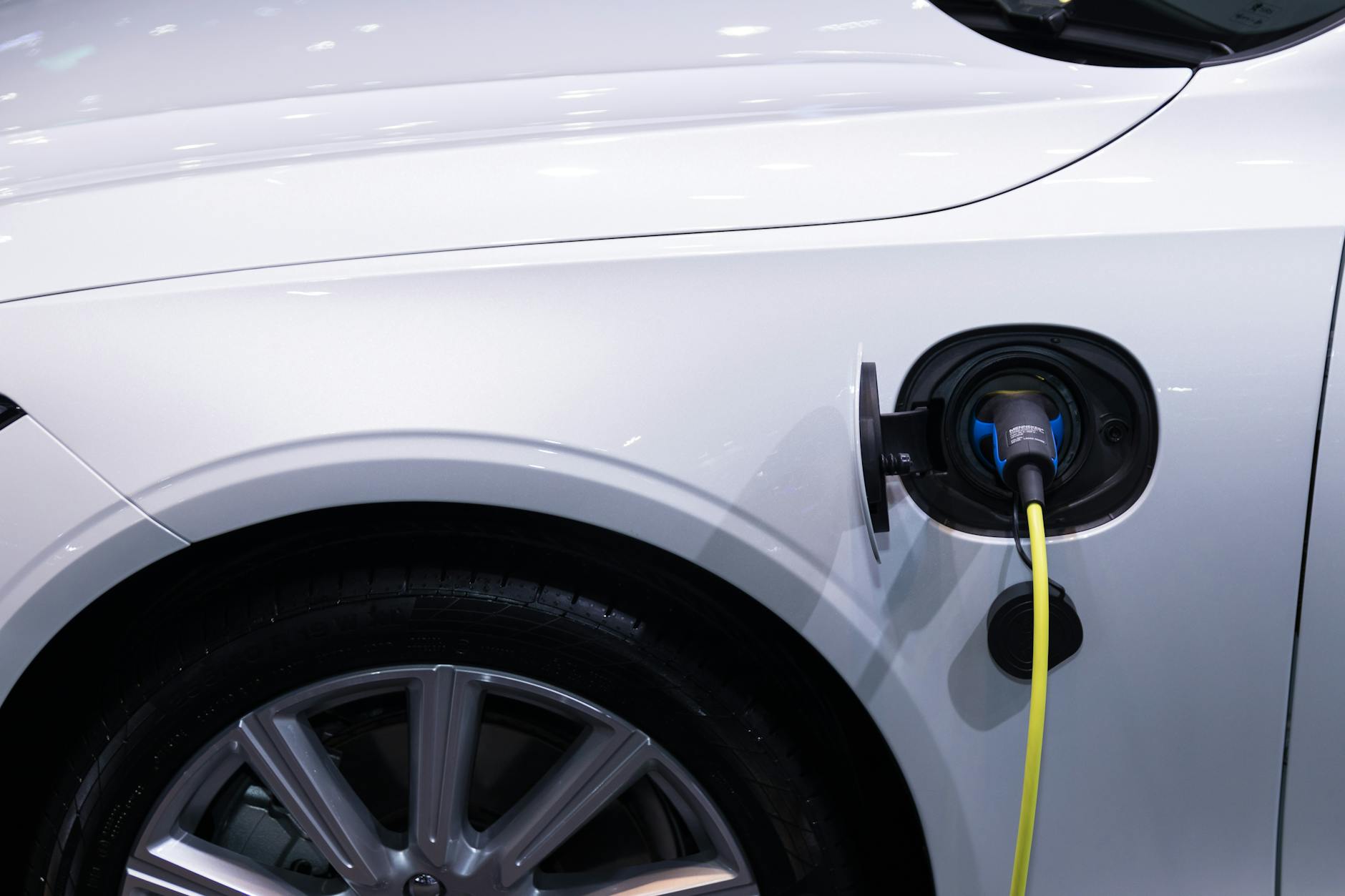
While battery chemistry frequently dominates discussions around the transition to sustainable transport, electric vehicle motor technology represents the true mechanical heart of the modern electric vehicle (EV). Converting stored electrochemical energy into immediate mechanical propulsion, the electric motor dictates an EV's acceleration, energy efficiency, high-speed thermal stability, and overall driving dynamics.
For decades, internal combustion engines (ICE) evolved through incremental gains in thermodynamics, valve timing, and forced induction. In contrast, the rapid acceleration of electric mobility has triggered an explosive era of innovation in electric motor architecture. Auto manufacturers are no longer relying on off-the-shelf industrial electric drives. Instead, they are engineering bespoke electromagnetic solutions tailored to specific vehicle classes—from high-efficiency commuter vehicles to hypercars capable of track performance.
Understanding the nuances of modern electric vehicle motor technology requires exploring how different motor designs work, how leading automakers deploy them, the material supply chains powering them, and the engineering breakthroughs shaping the next generation of zero-emission mobility.
How Electric Vehicle Motors Work: The Fundamentals
At its core, an electric vehicle motor relies on the fundamental principles of electromagnetism. When an electric current passes through wire coils (the stator), it generates a magnetic field. This field interacts with another magnetic field on a rotating shaft (the rotor), causing the rotor to turn and transmit torque to the vehicle's driveshaft and wheels.
Unlike internal combustion engines, which must idle and require variable gear ratios to operate effectively across speed bands, electric motors generate maximum torque instantaneously from zero revolutions per minute (RPM). Furthermore, electric motors function dynamically in reverse; during deceleration, the motor acts as a generator, turning kinetic energy back into electrical energy to recharge the battery via regenerative braking.
The Four Dominant EV Motor Architectures
Automakers utilize several primary motor architectures, each presenting distinct trade-offs between manufacturing complexity, material costs, energy efficiency, and power output.
1. Permanent Magnet Synchronous Motors (PMSM)
Permanent Magnet Synchronous Motors are currently the most widely deployed motor type in passenger electric vehicles. In a PMSM design, permanent magnets made from rare-earth elements—such as neodymium, dysprosium, and terbium—are embedded directly into or mounted onto the rotor surface.
Because the rotor creates its own continuous magnetic field without requiring electrical excitation from the battery, PMSMs deliver high energy efficiency at low and moderate speeds, superior volumetric power density, and excellent torque characteristics in stop-and-go city traffic.
- Key Advantage: Exceptional efficiency (often exceeding 95%) and compact, lightweight packaging.
- Primary Drawback: Dependence on costly rare-earth metals with volatile supply chains and susceptibility to thermal demagnetization at high temperatures.
- Common Applications: Rear drives of the Tesla Model 3 and Model Y, Hyundai E-GMP platform vehicles (Ioniq 5 and Ioniq 6), and the Porsche Taycan.
2. AC Induction (Asynchronous) Motors
Pioneered for automotive applications by Nikola Tesla and later commercialized by early EV designs, the alternating current (AC) induction motor does not use permanent magnets. Instead, electric current supplied to the stator coils induces an electromagnetic field in the rotor, causing it to rotate slightly slower than the stator field's synchronous speed—a concept known as slip.
Induction motors produce zero magnetic drag when coasting or de-energized. This makes them ideal secondary drive units in dual-motor, all-wheel-drive configurations where the auxiliary motor can be powered down entirely during highway cruising to maximize efficiency.
- Key Advantage: Robust construction, lower production cost, and zero reliance on rare-earth minerals.
- Primary Drawback: Lower efficiency at low speeds and under continuous heavy torque loads due to energy loss in rotor induction.
- Common Applications: Front motors in early Tesla Model S and Model X vehicles, Audi e-tron SUV, and secondary axles in various all-wheel-drive EVs.
3. Electrically Excited Synchronous Motors (EESM)
Also known as wound-rotor synchronous motors, Electrically Excited Synchronous Motors replace permanent rotor magnets with wire coils fed by an auxiliary electrical current through copper brushes or inductive couplings. This allows vehicle control units to dynamically adjust the strength of the rotor field based on real-time driving demands.
By controlling the magnetic field strength manually, engineers can eliminate high-speed back-electromotive force (back-EMF), which typically reduces high-speed motor efficiency in permanent magnet designs.
- Key Advantage: Complete elimination of rare-earth materials paired with optimized efficiency across high-speed cruising ranges.
- Primary Drawback: Increased mechanical complexity, slightly larger footprint, and potential wear components in brushed designs.
- Common Applications: Fifth-generation BMW eDrive systems (found in the BMW i4, iX, and i7) and Renault Zoe.
4. Axial Flux Motors
Traditional electric vehicle motor technology uses radial flux architecture, where the magnetic flux flows perpendicularly outward from the rotating shaft. In contrast, axial flux motors align the magnetic flux parallel to the axis of rotation, passing along the length of the shaft.
Axial flux motors feature a disc-like pancake shape rather than the traditional cylindrical structure. This design delivers power-to-weight ratios unmatched by conventional radial flux motors, making them ideal for performance applications where space and mass are critical factors.
- Key Advantage: Extreme power density, low mass, and highly compact spatial footprint.
- Primary Drawback: Manufacturing complexity, challenging thermal management in tightly packed rotors, and high unit costs.
- Common Applications: Ferrari SF90 Stradale hybrid powertrain, high-performance Mercedes-AMG developments (utilizing YASA axial flux technology), and aerospace electric drive concepts.
Engineering Breakthroughs Shaping Next-Gen EV Motors
Beyond selecting a foundational rotor and stator geometry, advanced manufacturing techniques and semiconductor physics are driving massive leaps forward in electric vehicle motor performance.
Hairpin Stator Windings
Traditional electric motor stators use bundled strands of circular copper wire wound through stator slots. Modern high-efficiency motors increasingly adopt hairpin winding technology, replacing round wire with precision-formed rectangular copper conductors shaped like hairpins.
The flat profile of rectangular copper permits tighter packing within the stator slots, increasing the copper fill factor from approximately 45% to upwards of 70%. This reduction in open space decreases internal electrical resistance, reduces heat generation, improves thermal conduction, and enables higher torque output within an identical physical envelope.
Direct Liquid and Oil Cooling Systems
As electric motors are pushed to deliver higher continuous horsepower—especially during high-speed highway travel, track driving, or heavy towing—managing thermal loads within the motor core becomes essential. Overheating can degrade stator insulation or permanently demagnetize rotor magnets.
Advanced drive units feature direct internal oil cooling, circulating dielectric fluid straight through the rotor shaft and over the exposed copper hairpin windings. By extracting heat directly from the sources of electrical resistance, motors can maintain high continuous power outputs without triggering thermal throttling safeguards.
Silicon Carbide (SiC) Inverters and 800V Architectures
An electric motor cannot operate in isolation; it requires a power electronics inverter to convert direct current (DC) from the battery into three-phase alternating current (AC) for the motor stators. The shift from standard 400-volt battery architectures to 800-volt power systems, paired with Silicon Carbide (SiC) semiconductors, has transformed motor design.
SiC switches operate at higher switching frequencies with significantly lower switching losses than conventional silicon-based IGBTs (Insulated Gate Bipolar Transistors). Operating at double the voltage reduces the current needed to deliver equivalent power output, allowing vehicle engineers to use thinner, lighter wiring harnesses and smaller motor coils without sacrificing total power output.
Real-World Case Studies: How Automators Optimize Motor Strategy
Automakers tailor their electric vehicle motor technology selection based on vehicle class, target price point, and performance targets.
Tesla: The Hybrid Dual-Motor Strategy
Tesla implemented a hybrid motor layout starting with the Model 3 Performance and subsequently across its dual-motor line-up. Instead of using identical motor technologies on both axles, Tesla combines a Permanent Magnet Switched Reluctance Motor (PM-SynRM) on the primary drive axle with an AC Induction Motor on the secondary axle.
The primary permanent magnet motor delivers efficiency during urban stop-and-go driving and constant cruising. When maximum power is required for rapid acceleration or total traction control, the secondary AC induction motor engages instantly. When cruising, the induction motor disengages without creating drag. This configuration offers high overall efficiency without sacrificing performance.
Lucid Motors: Extreme Power-Density Integration
Lucid Motors engineered drive units that combine the electric motor, single-speed planetary transmission, silicon carbide inverter, and differential into a package compact enough to fit inside an standard carry-on suitcase. Producing up to 670 horsepower while weighing only about 74 kilograms (163 lbs), Lucid's proprietary motor features micro-jet stator cooling and ultra-high copper slot fill achieved via custom hairpin winding geometry.
BMW: The Rare-Earth Elimination Path
Recognizing the supply chain vulnerabilities and environmental impact associated with rare-earth mineral mining, BMW developed its fifth-generation eDrive units around Electrically Excited Synchronous Motor (EESM) technology. By controlling rotor magnetic strength electronically, BMW achieved high power outputs and efficiency at high speeds while completely eliminating neodymium and dysprosium from its motor production facilities.
Benefits of Advanced Electric Vehicle Motor Technology
The continuous refinement of EV motor design brings systemic improvements across the entire electric transportation ecosystem:
- High Energy Conversion Efficiency: Modern EV motors routinely convert over 90% of electrical energy from the battery into physical momentum, compared to internal combustion engines which lose 70–80% of fuel energy as heat.
- Instantaneous Dynamic Response: Torque delivery occurs in milliseconds, facilitating advanced dynamic torque vectoring, improved electronic stability control, and superior dynamic traction on slick surfaces.
- Dramatically Reduced Maintenance: With only one major rotating assembly and no physical contact components in brushless motor designs, wear items like spark plugs, timing belts, fuel injectors, and exhaust systems are eliminated.
- Noise, Vibration, and Harshness (NVH) Reduction: The lack of mechanical reciprocating mass provides a smooth, quiet cabin environment, enhancing comfort for passengers.
Limitations, Environmental Risks, and Supply Chain Challenges
Despite their technical superiority over internal combustion engines, modern EV motor designs present ongoing challenges for the automotive industry:
1. Rare-Earth Element Dependencies and Supply Chain Concentration
Permanent magnet motors rely heavily on neodymium, dysprosium, and praseodymium. Mining and refining these rare-earth metals involve hazardous chemical processes that present environmental contamination risks if managed improperly. Furthermore, the concentration of global refining capacity in a limited number of regions exposes automotive manufacturers to geopolitical supply dislocations and sudden price spikes.
2. High-Speed Torque Fall-off and Heat Management
While electric motors produce peak torque at low speeds, high-speed operation creates counter-electromotive force (back-EMF) that opposes incoming battery voltage. This mechanical reality leads to a decline in available acceleration at higher speed ranges. Managing thermal loads during sustained high speeds without degrading stator wire insulation requires liquid cooling systems that add vehicle mass and packaging footprint.
3. Manufacturing and Retooling Capital Costs
Precision manufacturing techniques such as automated hairpin stator insertion, laser-welded copper interfaces, and axial flux rotor disc assembly demand capital investments in manufacturing plants. Automakers must balance the speed of implementing advanced motor innovations against the capital required to build out specialized production lines.
Future Outlook: Where EV Motor Technology Is Headed
The next decade will likely see several critical shifts in electric powertrain engineering:
- Expanded Adoption of Magnet-Free Motors: Driven by cost pressures and sustainability mandates, automakers will increasingly refine EESMs, advanced switched reluctance motors (SRMs), and permanent-magnet-free induction systems to eliminate rare-earth reliance without sacrificing power density.
- Commercialization of In-Wheel Hub Motors: Integrating small, highly efficient electric motors directly inside the wheel hubs eliminates traditional driveshafts, axles, and mechanical differentials entirely. While managing unsprung mass remains an engineering barrier, in-wheel motors offer unmatched cabin space optimization and individual wheel torque control.
- Single-Piece Integrated Electric Drives (3-in-1 e-Axles): Future powertrains will feature tight mechanical integration between power electronics, high-speed motors, and reduction gearboxes within unified aluminum or composite housings, reducing weight, structural size, and manufacturing steps.
- Advanced Soft Magnetic Materials: The introduction of amorphous metal cores and nano-crystalline magnetic materials within stator laminations will reduce high-frequency core energy losses, further pushing motor peak conversion efficiency toward thermodynamic limits.
Conclusion
Electric vehicle motor technology has transitioned from off-the-shelf industrial hardware into a sophisticated discipline of modern automotive engineering. Rather than relying on a single ideal motor type, the market has expanded into specialized solutions: permanent magnet motors for lightweight efficiency, induction systems for drag-free utility, wound-rotor motors for supply chain resilience, and axial flux systems for power density.
As automakers refine stator windings, deploy wide-bandgap silicon carbide inverters, and develop magnet-free architectures, the electric motor will continue to unlock greater range, improved thermal performance, and lower costs across every segment of transportation.
Frequently Asked Questions (FAQ)
1. What is the difference between an AC and DC motor in an electric vehicle?
While EV batteries store energy as Direct Current (DC), modern production electric vehicles utilize Alternating Current (AC) motors. Power electronics inverters convert the battery's DC power into variable-frequency AC power to run the motor, providing finer control over motor rotational speed, efficiency, and dynamic torque delivery.
2. Why do some electric vehicles use multiple motors?
Multi-motor setups (such as dual-motor AWD or tri-motor layouts) serve multiple purposes: they provide all-wheel drive traction, allow torque vectoring for precise handling, and enable manufacturers to pair complementary motor technologies (like a high-efficiency permanent magnet motor on one axle and a drag-free induction motor on the other).
3. How long do electric vehicle motors typically last?
Modern electric vehicle motors are engineered for long service lives, often matching or exceeding the planned lifespan of the vehicle chassis (frequently rated for 150,000 to 300,000 miles or more). Because brushless motors have very few moving parts—primarily sealed bearings—they experience significantly less mechanical wear than internal combustion engines.
4. Are rare-earth magnets required to make an electric vehicle motor?
No. While Permanent Magnet Synchronous Motors (PMSMs) use rare-earth minerals like neodymium to maximize power density, other proven motor types—such as AC Induction Motors and Electrically Excited Synchronous Motors (EESMs)—operate entirely without rare-earth magnets.
5. What makes axial flux motors different from standard EV motors?
Standard EV motors feature radial flux designs, where the magnetic field flows outwards perpendicularly from the driveshaft. Axial flux motors direct magnetic fields parallel to the rotational axis across disc-shaped rotors. This structure allows axial flux motors to achieve higher power density and a much thinner, lighter form factor, making them popular for high-performance applications.