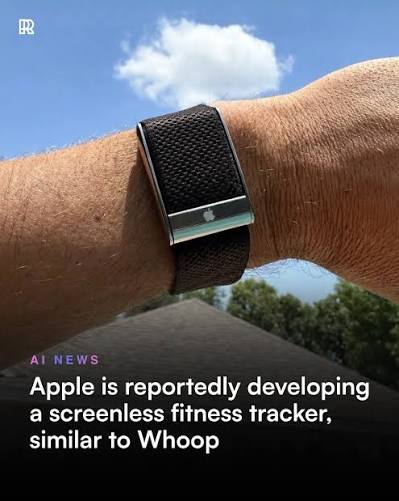
In a move that could signal a strategic shift in consumer health technology, reports indicate that Apple is considering the development of a screenless fitness tracker. This potential addition to the company's wearable lineup represents an effort to reach users who want continuous biometric monitoring without the distraction, weight, or daily charging requirements of a full-featured smartwatch. By looking beyond the display-centric design that has defined the wearable category for over a decade, Apple may be preparing to broaden its health ecosystem to entirely new demographics.
While the Apple Watch continues to lead the global smartwatch market, the wearable landscape has evolved rapidly. A growing segment of consumers is gravitating toward minimalist, display-free health accessories focused strictly on background telemetry, sleep tracking, and physical recovery. If Apple moves forward with a screenless fitness tracker, it could fundamentally reframe how the tech giant approaches ambient wellness, software integration, and hardware diversification.
Exploring the Shift: Apple Explores a Screenless Health Band
For years, Apple's wearable strategy has revolved around wrist-based computing centered around interactive displays. High-brightness OLED screens, touch interfaces, and digital crowns have allowed users to respond to messages, run apps, and view real-time workout metrics directly on their wrists. However, reports highlighting Apple's interest in a display-free fitness device suggest the company recognizes that visual interaction isn't always the primary requirement for personal health tracking.
Expanding Beyond the Smartwatch Paradigm
Smartwatches are powerful multipurpose tools, but they are not universally preferred by every consumer. Many users find constant wrist notifications intrusive, while others prefer wearing traditional analog timepieces, luxury mechanical watches, or specialized jewelry. A dedicated, display-free fitness tracker would allow users to stay fully embedded within the Apple Health ecosystem without needing to wear a bright, digital display on their opposite wrist or replace their favorite classic watch.
This initiative comes at a time when Apple's flagship smartwatch line continues to push the boundaries of wrist-based computing. Devices like the Apple Watch Series 12, Ultra 4, and AirPods 5 showcase how advanced visual computing and active engagement remain central to Apple's primary hardware roadmap. A screenless band, by contrast, would serve as a complementary tier rather than a direct replacement, targeting an understated, zero-distraction form factor.
The Growing Demand for Minimalist and Ambient Health Tracking
The consumer interest in screenless health hardware reflects a broader cultural trend toward digital wellness and ambient monitoring. As screen time increases across smartphones, tablets, and computers, many individuals actively seek ways to reduce visual noise while maintaining access to critical personal data.
Screen Fatigue and Digital Wellness
Smartwatches, despite their fitness orientation, remain notification hubs. Buzzes, alerts, and glowing displays can disrupt focus during work hours, exercise sessions, and social interactions. A screenless wearable eliminates visual and haptic interruptions, shifting the interaction entirely to the connected smartphone app. Users collect health insights throughout the day and review them deliberately when opening their health dashboard, rather than reacting to real-time wrist pings.
Continuous 24/7 Monitoring and Sleep Comfort
One of the persistent challenges of display-heavy smartwatches is battery life and wearability during rest. Bright displays, high-refresh rates, and complex graphics hardware draw significant power, frequently requiring daily charging sessions. Because charging often occurs overnight, many users miss out on vital sleep-tracking data.
A screenless form factor removes the single largest power drain on a wearable device—the display module. Without a screen, power consumption drops dramatically, enabling multi-day operational life on a smaller battery. Furthermore, a flexible, lightweight, display-free band is significantly more comfortable to wear to bed, removing the bulk and light disturbance associated with traditional smartwatches.
Technical and Architectural Implications for Apple's Hardware
Engineering a screenless fitness tracker presents a unique set of design opportunities and challenges. Stripping away the display requires Apple to rethink how data is processed, offloaded, and analyzed within its broader ecosystem.
Low-Power Sensor Design and Efficient Processing
Without a screen to display graphical user interfaces, the internal architecture of a minimalist tracker focuses entirely on sensor accuracy and energy efficiency. Such a device would likely feature continuous photoplethysmography (PPG) sensors for heart rate and blood oxygen monitoring, accelerometers for movement, and thermal sensors for body temperature tracking.
To manage continuous data collection without draining a tiny battery, the device would rely on highly optimized microcontrollers. Recent industry developments in semiconductor hardware and custom processing architectures highlight how low-power chips enable continuous biometric sampling without requiring heavy onboard compute power. Raw biometric data can be efficiently collected locally and periodically synced via low-energy wireless protocols to a nearby iPhone for intensive processing and machine learning analysis.
Deep Software Integration with iPhone and Apple Health
Because a screenless wearable lacks an interface, the companion software becomes the central hub of the user experience. Apple's Health app and Fitness platform would carry the entire burden of displaying trends, recovery scores, and activity metrics. Apple could use this opportunity to introduce enhanced predictive health insights, algorithm-driven sleep analysis, and personalized coaching metrics directly within iOS, converting background telemetry into actionable health guidance.
Competitive Landscape: Why Screenless Wearables Matter Now
The potential entry of Apple into the screenless wearable segment would represent a direct challenge to existing market players that have carved out lucrative niches in minimalist biometric tracking.
Challenging the Fitness Band and Smart Ring Market
Brands specializing in continuous athletic recovery and display-free health tracking have proven that there is a dedicated market for screenless devices. Athletes, fitness enthusiasts, and health-conscious professionals frequently choose dedicated bands or smart rings specifically because they do not look or act like smartwatches. If Apple offers a sleek, screenless alternative that natively syncs with Apple Health without third-party subscription hurdles or complex setup procedures, it could rapidly capture market share in the minimalist fitness segment.
Expanding the Apple Health Ecosystem Capture
Hardware in Apple's ecosystem acts as an entry point for software services. By offering a potentially lower-cost, screenless health tracker, Apple could attract users who were previously hesitant to invest in a premium Apple Watch. Once integrated into the iOS Health ecosystem, these users are more likely to utilize companion services, subscription fitness offerings, and peripheral Apple accessories.
Key Benefits of a Minimalist Apple Screenless Tracker
Exploring a display-free form factor offers several distinct strategic and functional benefits for both consumers and the manufacturer:
- Extended Battery Life: Eliminating display power consumption allows for multi-day usage on a single charge, ideal for uninterrupted sleep tracking.
- Unobtrusive Design: A lightweight, low-profile band can be worn discreetly alongside classic wristwatches, jewelry, or athletic gear.
- Reduced Digital Distractions: Users can collect health telemetry without managing constant wrist notifications, incoming messages, or application alerts.
- Improved Sleep Ergonomics: Smaller, flexible form factors provide greater physical comfort during night-time wear.
- Lower Entry Price Point: Removing expensive display panels and complex graphics hardware could allow for a more accessible product tier in Apple's wearable lineup.
Potential Limitations and Strategic Risks
While the concept of a screenless fitness tracker offers clear advantages, it also introduces operational and market challenges that Apple must carefully consider.
Lack of Real-Time Visual Feedback
The primary drawback of a screenless device is the complete absence of instant visual feedback. Users cannot glance at their wrist to check their current heart rate during an intense workout, track distance while running without bringing a smartphone, or view simple workout timers. For active runners, cyclists, and gym-goers who rely on real-time metrics during exercise, a screenless band may feel insufficient compared to a full-featured smartwatch.
Risk of Ecosystem Confusion and Cannibalization
Introducing a second distinct wearable category creates potential positioning challenges. Apple must clearly communicate the target audience for a screenless tracker to prevent consumer confusion regarding the differences between an entry-level Apple Watch and a specialized screenless health band. Furthermore, Apple must ensure that a cheaper display-free band expands the total market rather than pulling prospective buyers away from higher-margin smartwatch models.
Real-World Use Cases: Who Is a Screenless Tracker For?
To understand the practical value of a screenless Apple fitness band, it is helpful to examine specific user scenarios where a minimalist wearable excels:
1. The Traditional Watch Aficionado
A luxury watch collector wants to wear a mechanical timepiece on their primary wrist but also wants to track daily activity, step counts, and overnight recovery data. Wearing an Apple Watch on the opposite wrist can look redundant. A sleek, screenless fabric or silicone band on the secondary wrist provides complete health data collection without compromising personal style.
2. The Focus-Driven Athlete
A long-distance runner or martial artist wants to log training volume and physiological stress without managing screen reflections, accidental touch inputs from sweat, or distracting notification buzzes. A screenless band records high-frequency biometric data quietly in the background, allowing the athlete to analyze performance trends post-workout on their iPhone.
3. The Dedicated Sleep and Recovery Enthusiast
A health-conscious individual prioritizes tracking sleep architecture, heart rate variability (HRV), and ambient temperature fluctuations. They find bulky smartwatches uncomfortable to wear in bed and dislike glowing screens turning on during overnight movement. A lightweight, screenless band provides seamless 24/7 monitoring with zero light pollution and minimal physical presence.
Future Outlook: The Evolution of Ambient Health Hardware
Reports that Apple is evaluating a screenless fitness band demonstrate that the future of personal health technology isn't solely defined by larger, brighter displays. Instead, the industry is gradually shifting toward ambient computing—technology that operates quietly in the background, collecting valuable data without demanding constant human attention.
Whether this evaluation leads directly to a commercial product release or feeds into broader sensor research, it underscores Apple's recognition that personal wellness hardware must adapt to diverse consumer lifestyles. As sensor miniaturization advances and low-power processing continues to mature, screenless wearables could represent the next major evolution in how we interact with biometric technology.
Frequently Asked Questions (FAQ)
1. Is Apple officially releasing a screenless fitness tracker?
Based on current market context and news reports, Apple is considering and evaluating the concept of a screenless fitness tracker. Apple has not officially announced a commercial product or confirmed release dates.
2. How would users view health data without a screen?
A screenless fitness tracker relies on a companion smartphone app for data display. Biometric information collected by the band is transmitted wirelessly via low-power Bluetooth to the Apple Health app on an iPhone, where users can review detailed metrics, trends, and recovery analysis.
3. Why would someone prefer a screenless tracker over an Apple Watch?
Users often prefer screenless trackers because they offer multi-day battery life, zero notification distractions, lightweight comfort for sleep tracking, and the ability to wear traditional luxury wristwatches without needing two digital screens.
4. Would a screenless fitness band have better battery life than a smartwatch?
Yes. Digital displays are the single largest source of power consumption on modern wearables. Eliminating the screen allows a wearable device to operate for multiple days or even weeks on a single small battery.
5. How does a screenless tracker fit into Apple's current health vision?
A screenless device aligns with ambient health tracking, allowing Apple to gather uninterrupted, long-term health telemetry—such as sleep trends, heart rate variability, and body temperature—without requiring users to interact with a display throughout the day.
Conclusion
Apple's exploration of a screenless fitness tracker reflects an evolving industry landscape where less visual interaction can sometimes yield a better health tracking experience. By taking display power drain and screen notifications out of the equation, a minimalist wearable could offer unmatched comfort, long battery life, and continuous health monitoring for users who prefer simplicity over wrist-based computing. While smartwatches will remain central to Apple's mobile hardware strategy, a display-free fitness band could unlock a flexible, unobtrusive new avenue for ambient health tracking.